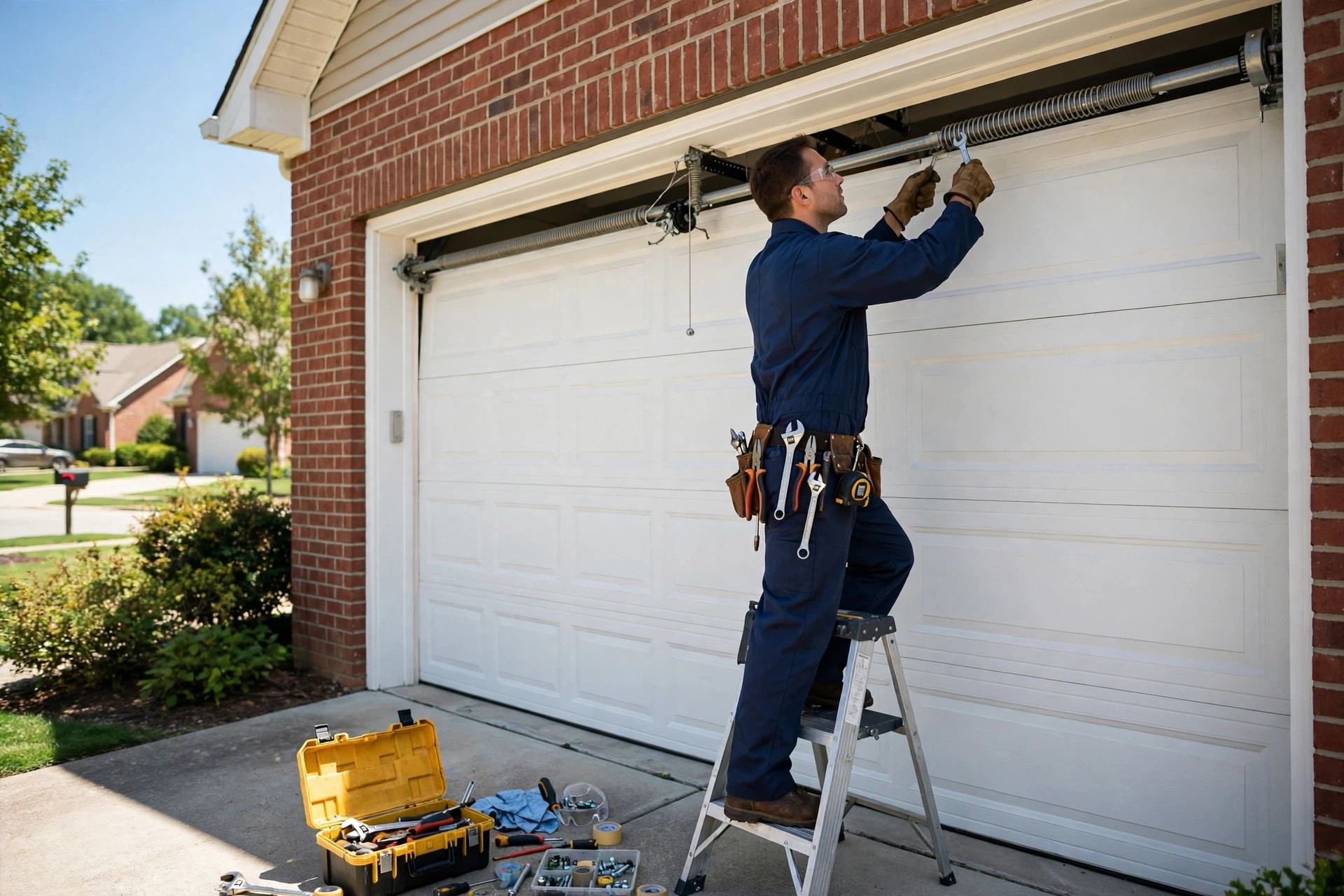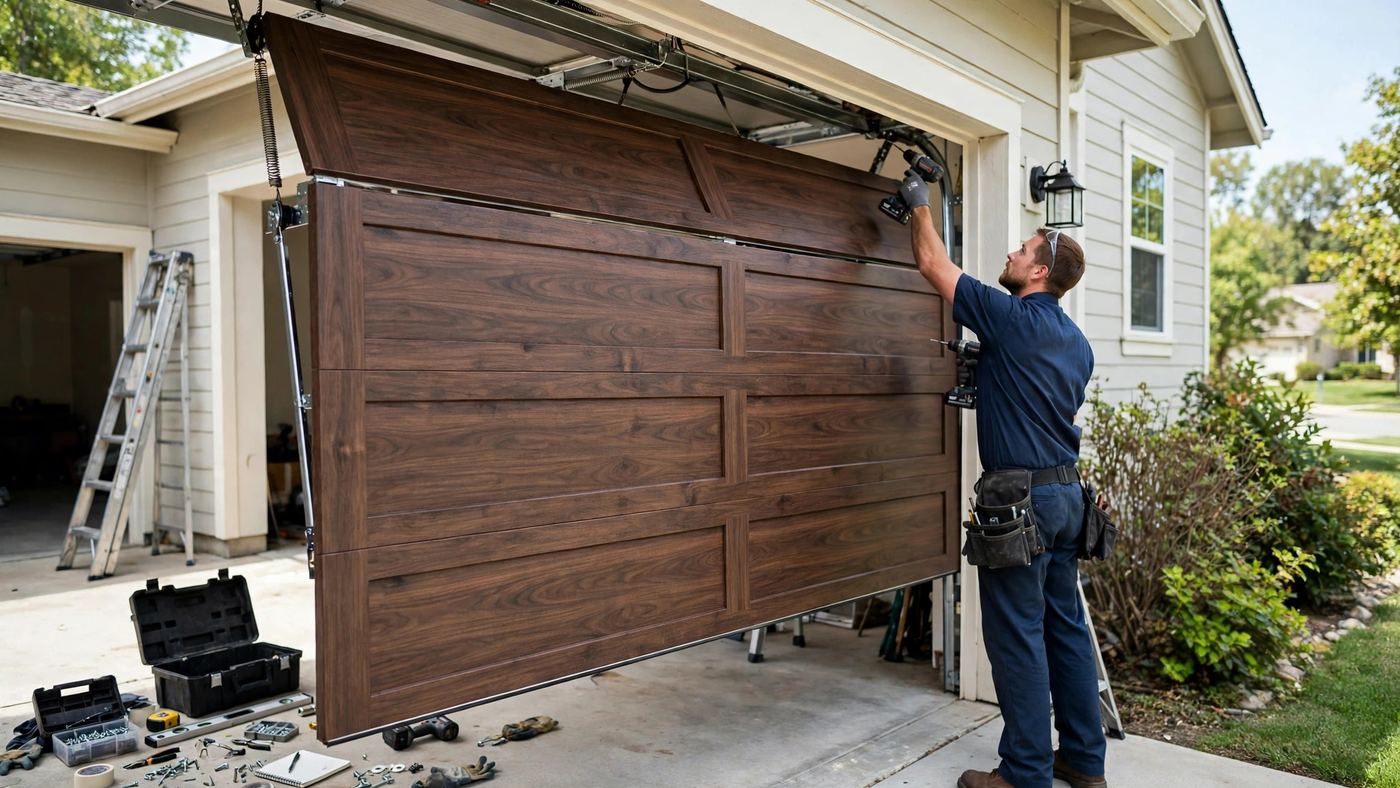
The general rule: new noises are information, and sudden noises are urgent information. A door that changed its sound last week is telling you something changed mechanically last week.
In This Guide
- Squeaking and Squealing: Dry Metal, Usually Benign
- Grinding and Rumbling: Rollers and Bearings Wearing Out
- Rattling and Vibrating: Loose Hardware and Chain Slap
- Bangs, Pops and Cracks: The Sounds to Respect
- The Quiet-Door Recipe
- Noise as a Maintenance Schedule
- The Neighbor Test: How Loud Is Too Loud?
- Describing the Sound: Getting the Right Parts on the Truck
Key Takeaways
- High-pitched squeaks at hinges and rollers mean dry pivot points — metal asking for lubricant.
- A low grinding or a rumble like a distant train is the sound of rolling elements failing — cracked steel wheels, flat-spotted plastic rollers, or bearings that have lost their smoothness.
- Doors vibrate their own hardware loose over thousands of cycles — hinge bolts, track bracket nuts, and opener mounting all walk gradually.
- A single loud bang from the garage, especially with the door idle, is the classic sound of a torsion spring breaking — check for a visible gap in the coil above the door and treat the door as out of service until a technician replaces the spring ($120-$350).
- If quiet is the goal, the combination that works: sealed nylon rollers (the big one), balanced door with healthy springs (an unbalanced door strains and groans), lubricated hinges and springs, tight hardware, and — if the opener is due — a belt-drive unit instead of chain.
- Treat your door's soundtrack as a reporting system.
- A healthy modern door with nylon rollers and a belt drive is quieter than a conversation — audible in the garage, ignorable in the house.
- The most useful thing you can do for a noise repair costs nothing: capture it.
How to use this guide: work the checks in the order given — they're sequenced from the most common and cheapest causes to the rarest and most involved, which is exactly how a technician's diagnosis proceeds. Stop at the step that solves it, and stop entirely at anything involving springs, cables or a door that's crooked or off its tracks: those are professional jobs, and this guide will tell you plainly when you've reached one. If you reach the end without a fix, call (210) 964-8892 and tell the dispatcher which steps you completed — you'll skip half the diagnosis and get the right parts on the first truck.
Squeaking and Squealing: Dry Metal, Usually Benign
High-pitched squeaks at hinges and rollers mean dry pivot points — metal asking for lubricant. The fix is a garage-door lubricant (silicone or white lithium spray) applied sparingly to hinge pivots, roller stems and bearings, and the spring coils. Run the door a few cycles to work it in. Squeaks that survive lubrication point to a specific worn roller or a hinge that's cracking — inspect while a helper runs the door and pinpoint the position.
Never grease the tracks. It's the most common DIY mistake in garage doors: grease in the track collects grit, makes rollers skid instead of roll, and worsens both noise and wear. Tracks should be clean and dry; rollers should roll, not slide.
Grinding and Rumbling: Rollers and Bearings Wearing Out
A low grinding or a rumble like a distant train is the sound of rolling elements failing — cracked steel wheels, flat-spotted plastic rollers, or bearings that have lost their smoothness. Lubricant won't fix a flat spot. The cure is a roller replacement set ($120-$250 installed), and the upgrade to sealed nylon rollers typically makes the door quieter than it's ever been.
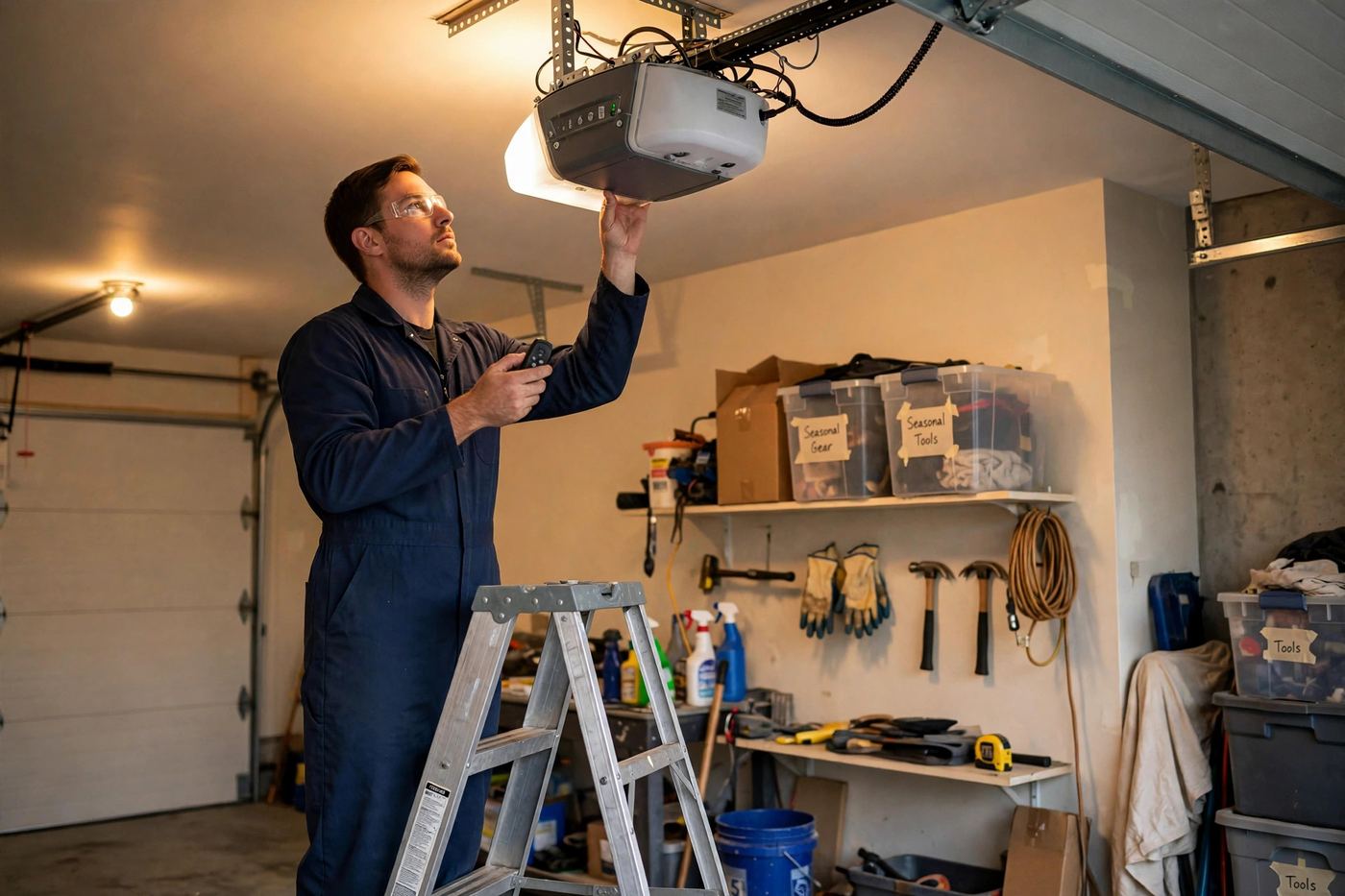
Grinding from the opener itself is a different address: on chain-drive units it often means a worn drive gear (listen for it near the motor housing, sometimes with white plastic shavings below), a $120-$250 repair. Grinding that appeared suddenly, with the door moving unevenly, suggests a roller has left its bracket or a bearing plate has seized — stop cycling the door and have it inspected.
Rattling and Vibrating: Loose Hardware and Chain Slap
Doors vibrate their own hardware loose over thousands of cycles — hinge bolts, track bracket nuts, and opener mounting all walk gradually. A systematic tightening of every accessible fastener (with the door closed and opener unplugged) cures most rattles. On chain drives, a stretched chain slapping the rail adds its own percussion; chain tension is adjustable, but over-tightening strains the motor — follow the manual's sag spec (about 1/2 inch of play at mid-rail).
Also check the sections themselves: loose window frames, a detached reinforcement strut, and worn weather seals all contribute their own notes. A rattle audit takes fifteen minutes and a socket wrench, and it's part of every professional tune-up.
Bangs, Pops and Cracks: The Sounds to Respect
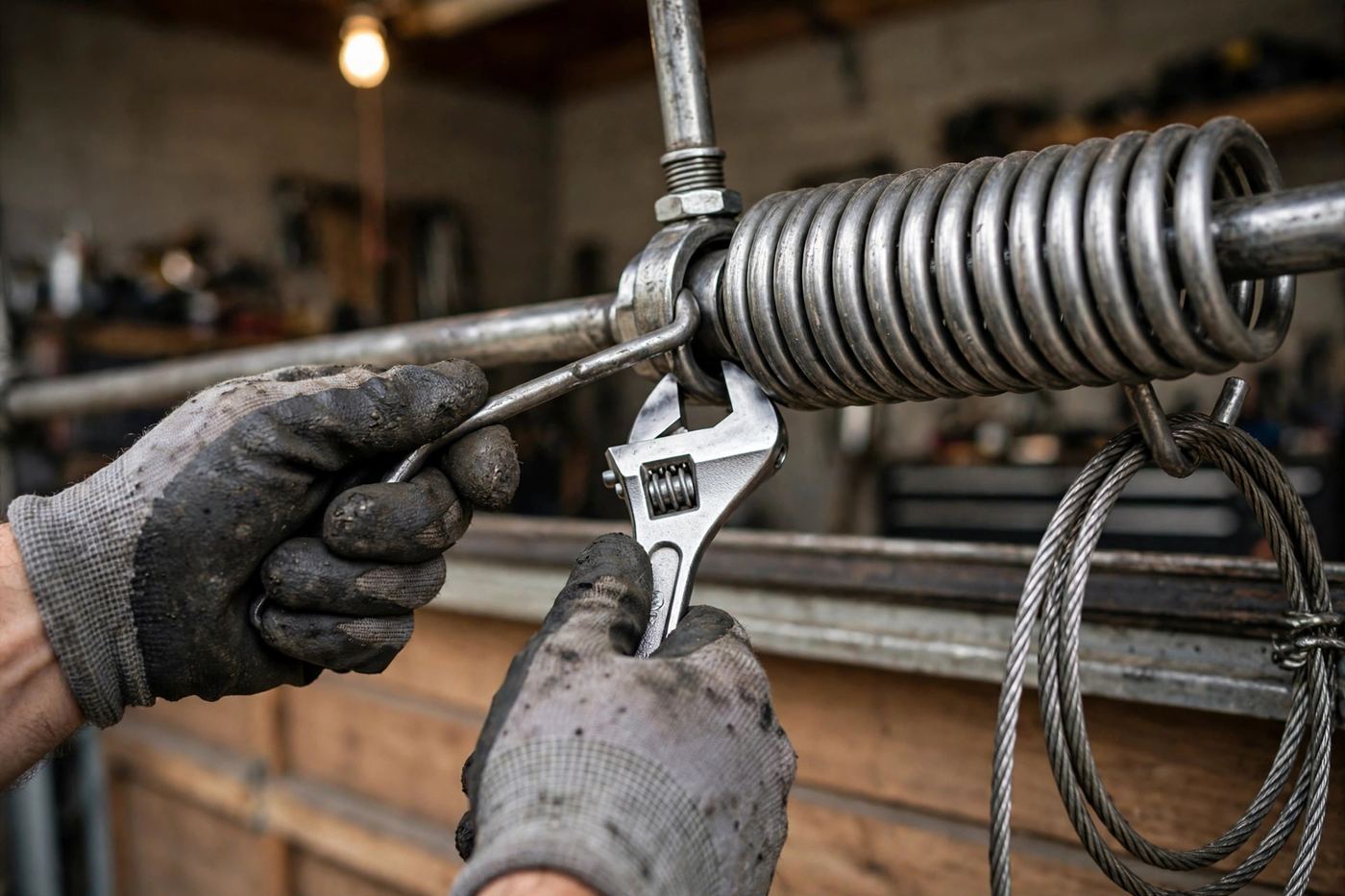
A single loud bang from the garage, especially with the door idle, is the classic sound of a torsion spring breaking — check for a visible gap in the coil above the door and treat the door as out of service until a technician replaces the spring ($120-$350). A bang during travel can mean a roller leaving the track or a section binding and releasing — likewise, stop and inspect before running it again.
Popping as the door rounds the track curve is usually sections pinching due to worn hinges or track alignment drifting; it progresses to binding and derailment if ignored. A crack or snap from the opener housing can be a capacitor failing or a belt/chain letting go. Sudden loud noises are the door's fire alarm: never just turn up the radio on them.
The Quiet-Door Recipe
If quiet is the goal, the combination that works: sealed nylon rollers (the big one), balanced door with healthy springs (an unbalanced door strains and groans), lubricated hinges and springs, tight hardware, and — if the opener is due — a belt-drive unit instead of chain. Together they routinely take a door from neighborhood alarm clock to barely audible through the wall.
A professional tune-up ($75-$150) covers everything except the opener swap and tells you exactly which items your door needs. If the door is loud, that's the visit to book — most noise problems are maintenance problems that waited too long.
Noise as a Maintenance Schedule
Treat your door's soundtrack as a reporting system. A new squeak is a dry pivot asking for lubricant this month. A growing rumble is a roller set spending its last year. A pop at the curve is a hinge asking to be replaced before it becomes a bind. None of these are emergencies; all of them are appointments — and the difference between a $90 hinge this spring and a $300 derailment next winter is whether the sound got an answer.
The discipline is simple: once a month, stand in the garage and listen to one full cycle with your full attention — thirty seconds. You're not maintaining the door in that moment; you're reading its mail. Every professional tune-up begins with exactly this listen.
The Neighbor Test: How Loud Is Too Loud?
A healthy modern door with nylon rollers and a belt drive is quieter than a conversation — audible in the garage, ignorable in the house. A standard steel-roller door is a low rumble you can hear through an interior wall but sleep through. Anything that wakes the house, rattles windows, or can be heard clearly at the street has a mechanical cause worth finding — noise at that level is energy being spent on wear instead of motion.
If you're house-hunting or selling, run the door during the visit: its voice tells a practiced listener the maintenance history of the whole system. Sellers: the $120-$250 roller set that silences a door is one of the cheapest inspection-report improvements in real estate.
Describing the Sound: Getting the Right Parts on the Truck
The most useful thing you can do for a noise repair costs nothing: capture it. A 15-second phone video of one full open-close cycle, taken from inside the garage, carries more diagnostic information than any verbal description — a technician can hear roller rumble versus hinge squeal versus opener grind, and can often see the bind happen. Send it when you book, and the truck arrives stocked for your actual problem.
Note the pattern details too: where in the travel the noise peaks (at the curve points to hinges and rollers; at the start, to balance and opener strain), whether it's new or grown, and whether weather changes it (cold-morning noise that fades is lubricant and contraction; constant noise is wear).
Owners sometimes apologize for 'just a noise.' Don't. Noise is the door's early-warning system working perfectly, and catching it in the noisy stage — rather than the broken stage — is the entire economics of this guide in one sentence.
Garage Door Sounds Decoded
| Item | Cost / Rating | Notes |
|---|---|---|
| Squeak at hinges/rollers | Dry pivot points | Lubricate; $0 DIY |
| Grinding / rumbling | Worn rollers or bearings | Roller set $120-$250 |
| Rattling | Loose hardware, chain slap | Tighten; adjust chain |
| Single loud bang | Spring breaking | Stop; spring $120-$350 |
| Popping at the curve | Hinge wear / sections pinching | Hinge service; don't ignore |
| Grinding at the motor | Opener gear wearing | Gear kit $120-$250 |
Frequently Asked Questions
Why is my garage door so loud all of a sudden?
Sudden noise changes mean something changed: a roller cracked, a hinge tore, a bearing seized, or a spring broke. Inspect (without running the door repeatedly) or book an inspection — sudden is the keyword that matters.
Will lubricating the door fix the noise?
It fixes squeaks from dry pivots — genuinely common. It won't fix grinding (worn rollers/bearings), rattling (loose hardware) or bangs (spring/track events). Match the fix to the sound using this guide.
Are nylon rollers really quieter than steel?
Dramatically. A sealed nylon roller set is the single biggest noise reduction available for most doors, and it's a $120-$250 job. Homeowners routinely describe it as the best money they've spent on the door.
My door pops when it opens. Is that dangerous?
Popping at the curve usually means sections are pinching from hinge wear or alignment drift. Not an emergency today, but a progression toward binding and off-track failure — schedule service rather than ignoring it.
The opener is the loud part. Options?
Check for a worn gear (grinding near the motor) — repairable. If the unit itself is just old and chain-driven, a modern belt-drive opener is the permanent quiet fix, $450-$700 installed.
Is a noisy garage door dangerous?
Noise itself isn't danger — it's information. The exceptions are sudden bangs (a spring letting go) and grinding paired with uneven movement (a roller leaving its bracket or a bearing seizing). Those two patterns mean stop using the door and book service. Everything else is schedule-it maintenance.
Related Services
Roller & Hinge Repair
Grinding, rattling, shuddering door? Worn rollers and hinges are the usual culprits — replaced as a set for a door that glides.
Learn more about roller & hinge repair →Garage Door Maintenance & Tune-Up
A full tune-up: balance test, lubrication, hardware tightening, sensor and safety checks — the cheapest way to avoid a breakdown.
Learn more about garage door maintenance & tune-up →Garage Door Repair
Complete diagnosis and repair for doors that won't open, close, balance or seal — most repairs finished in a single visit.
Learn more about garage door repair →← All garage door guides · Costs & pricing hub
Garage Door Stuck? We Can Fix It Today.
Same-day appointments and 24/7 emergency service across all 50 of our service cities. Upfront price before work starts — no surprises on the invoice.
(210) 964-8892 ☎ Call Now — Open 24/7