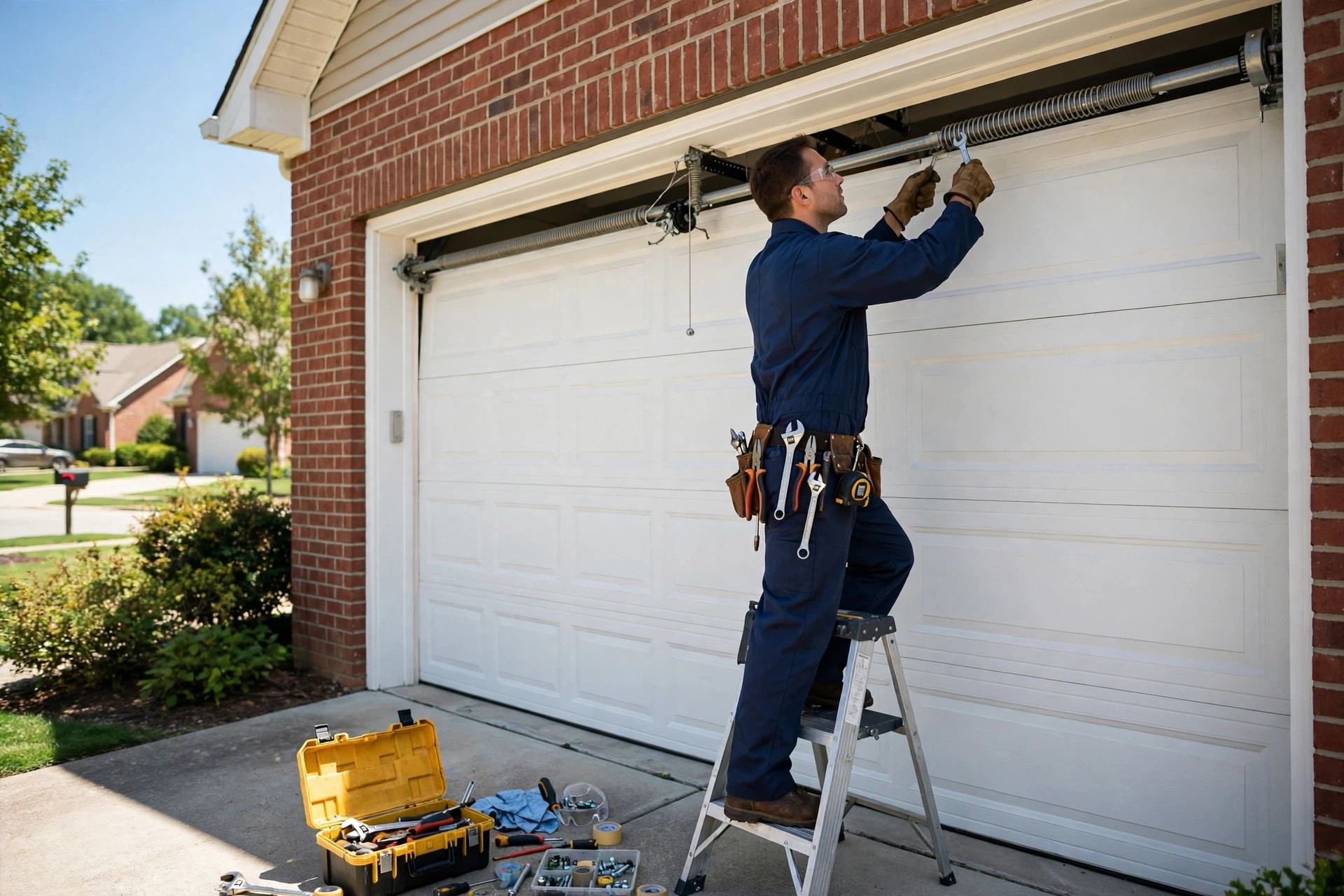
So wind ratings are not a marketing line; they are the number that says whether your door is built to stay in its opening under a given storm. This guide decodes the three numbers you will meet on a door's label — wind speed in miles per hour, design pressure in pounds per square foot, and the wind-load versus impact distinction — explains which rating your local code actually requires, and prices both a rated replacement door and a retrofit for the door you already own.
In This Guide
- Why the Garage Door Fails First
- The Three Numbers on the Label: MPH, PSF and Design Pressure
- Wind-Load Rated vs Impact Rated: Two Different Promises
- What the Code Requires Where You Live
- What a Rated Door Costs — and What a Retrofit Costs
- After the Storm: Inspecting a Rated Door That Took a Hit
- Renters, Buyers and the Label Question
- Choosing a Rated Door: The Showroom Questions
Key Takeaways
- A garage door is a wide, flat panel held in light-gauge tracks by small rollers, and wind treats it exactly like a sail.
- Wind speed in miles per hour is the number most homeowners recognize, and it is the least precise of the three.
- A wind-load rated door is engineered to stay in its opening under pressure: heavier-gauge steel, reinforced struts across the sections, stronger track and bracket hardware, and, critically, a track system anchored into framing that can take the load.
- Requirements are local, and they are set by the building code your jurisdiction adopted — most commonly the International Residential Code with local wind-speed maps, or Florida's statewide code, which is the strictest in the country.
- A wind-rated replacement door costs more than a standard door, and the premium buys steel, struts and hardware, not branding.
- A rated door that survived a storm still needs an inspection, because ratings are tested on new doors and storms age doors in fast-forward.
- If you are buying a home in a wind zone, the garage door's label belongs on your inspection checklist alongside the roof's age.
- At the showroom or the quote, five questions separate a rated door from a rated-sounding door.
How to use this guide: work the checks in the order given — they're sequenced from the most common and cheapest causes to the rarest and most involved, which is exactly how a technician's diagnosis proceeds. Stop at the step that solves it, and stop entirely at anything involving springs, cables or a door that's crooked or off its tracks: those are professional jobs, and this guide will tell you plainly when you've reached one. If you reach the end without a fix, call (210) 964-8892 and tell the dispatcher which steps you completed — you'll skip half the diagnosis and get the right parts on the first truck.
Why the Garage Door Fails First
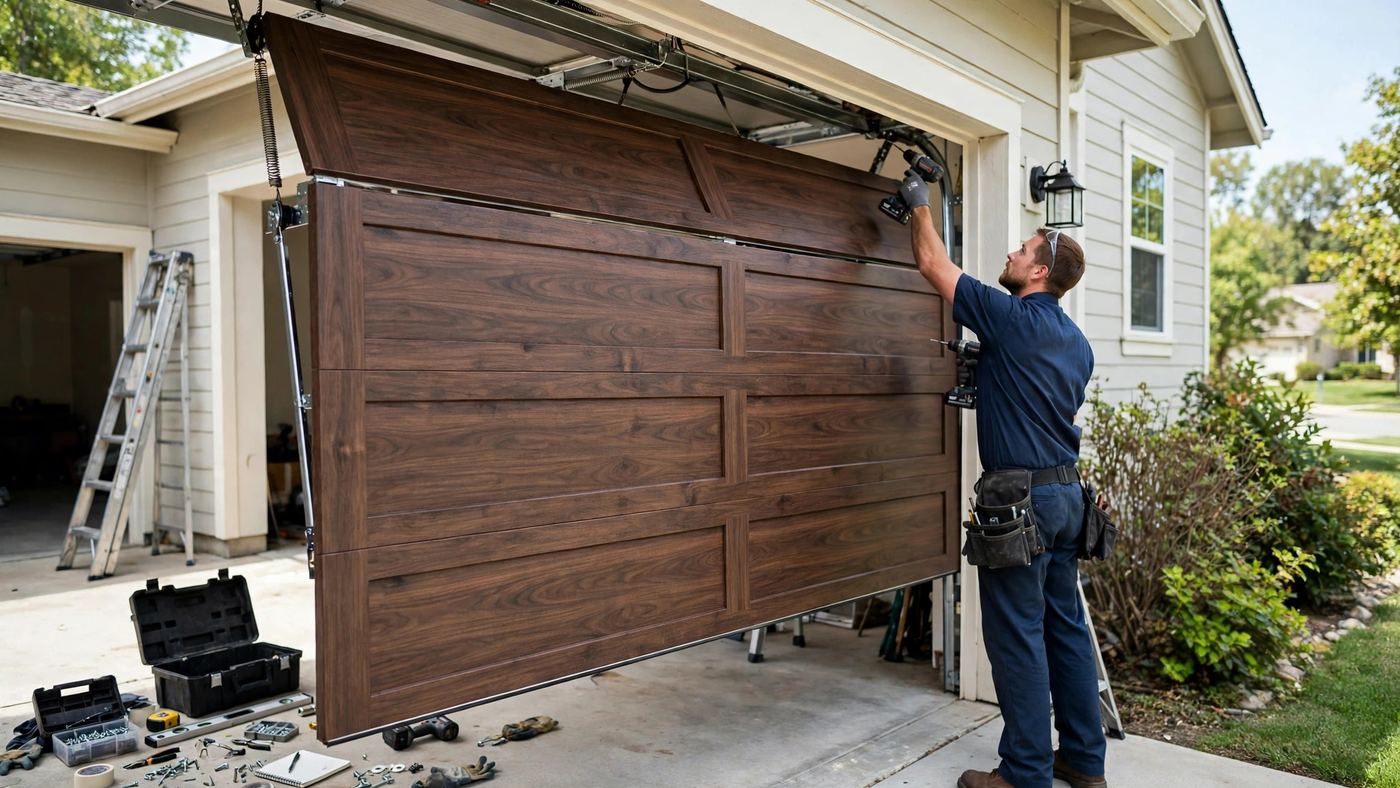
A garage door is a wide, flat panel held in light-gauge tracks by small rollers, and wind treats it exactly like a sail. A standard 16-foot double door presents over 100 square feet of surface to the storm; at hurricane wind speeds, the total force on that surface runs into thousands of pounds, all of it trying to push the door inward or pull it outward. The failure modes are specific: the panel bows and pops out of its tracks, the center stile buckles, the track brackets pull out of the wall framing, or the door folds at a horizontal section joint.
The consequence is what makes this a structural issue rather than a cosmetic one. Building researchers have documented the chain repeatedly: door breach, internal pressurization, roof uplift, and then failure of the roof structure itself. A home's wind story is only as strong as its largest opening, which is why modern building codes in wind-borne debris regions treat the garage door as a structural component with a required rating — not as an accessory you pick for looks. If you live anywhere storms are a real risk, the rating question comes before the color question.
The Three Numbers on the Label: MPH, PSF and Design Pressure
Wind speed in miles per hour is the number most homeowners recognize, and it is the least precise of the three. A door advertised as rated to 150 MPH is shorthand for a laboratory test at a specific pressure, on a specific door size, installed a specific way. The same door in a wider size, or installed with different bracing, does not automatically carry the same number — size and installation are part of the rating, not footnotes to it.
Design pressure, measured in pounds per square foot (PSF), is the number engineers actually use. Positive pressure pushes the door inward; negative pressure (suction on the leeward side and at building corners) pulls it outward, and negative ratings are usually the larger number because suction is what peels doors out of their tracks. A label might read +30 / -35 PSF, meaning the door withstood 30 PSF inward and 35 PSF outward in testing. Higher is stronger, and the code requirement for your address is expressed in PSF for your exact exposure — distance from the coast, building height, and whether the door sits in a corner zone where wind accelerates.
Wind-Load Rated vs Impact Rated: Two Different Promises
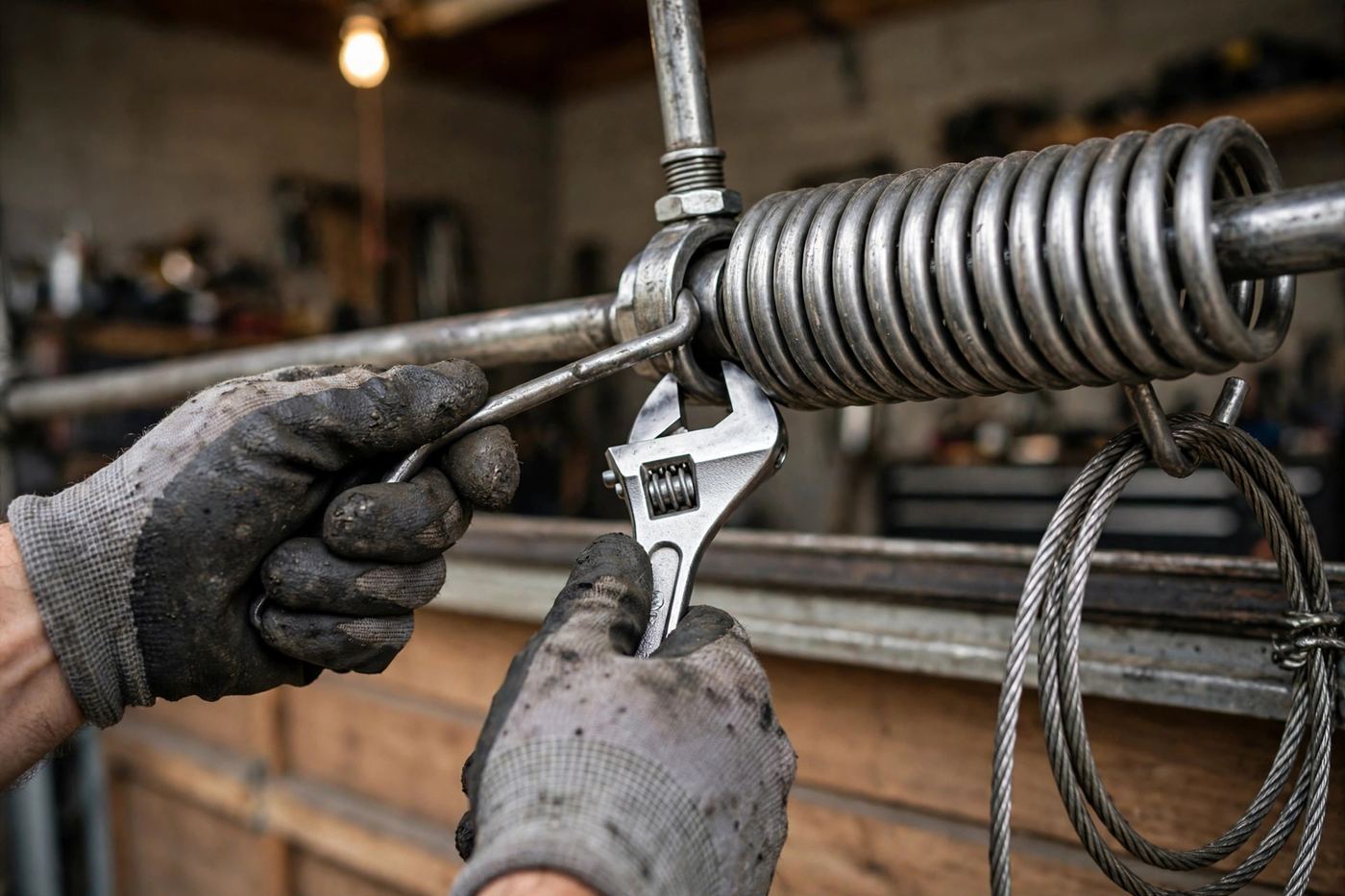
A wind-load rated door is engineered to stay in its opening under pressure: heavier-gauge steel, reinforced struts across the sections, stronger track and bracket hardware, and, critically, a track system anchored into framing that can take the load. It is tested by applying pressure and suction to the door until it either holds or fails. This is the rating that matters for structural survival, and it is the baseline requirement in most wind-code jurisdictions.
An impact-rated door adds a second promise on top of that: it also survives wind-borne debris. In testing, the door is struck with a 9-pound 2x4 fired at 34 miles per hour, then pressure-cycled thousands of times to simulate the pulsing of a storm. A door can be wind-load rated without being impact rated, and the difference matters because most hurricane door failures in debris zones start with an impact — a panel punctured or dented by flying debris loses its stiffness, and the pressure finishes what the debris started. If your code zone requires impact protection, a wind-load-only door does not comply, no matter how high its MPH number reads.
What the Code Requires Where You Live
Requirements are local, and they are set by the building code your jurisdiction adopted — most commonly the International Residential Code with local wind-speed maps, or Florida's statewide code, which is the strictest in the country. Florida's High-Velocity Hurricane Zone (Miami-Dade and Broward counties) requires impact-rated doors, tested to the most demanding standard in the United States. Much of coastal Texas falls under the Texas Department of Insurance windstorm program, which requires doors tested and labeled to the wind speeds and pressures for the specific coastal county.
Inland, the picture softens but does not disappear. Wind-speed maps run well inland along the Gulf and Atlantic coasts, and many jurisdictions outside the debris zones still require wind-load rated doors at specific PSF values — just without the missile-impact test. Two practical rules follow. First, check with your local building department or your insurer before you buy: the requirement attaches to your address, not your state. Second, keep the label: a rated door's compliance lives in its permanent label and its installation paperwork, and both matter at resale and at claim time. A door installed without its bracing, or with its reinforcement struts removed, is not the rated door anymore.
What a Rated Door Costs — and What a Retrofit Costs
A wind-rated replacement door costs more than a standard door, and the premium buys steel, struts and hardware, not branding. In 2026, a standard single door runs $550-$1,300 installed and a standard double $800-$1,800; a wind-load rated single typically lands at $900-$1,500 and a rated double at $1,300-$2,200, with impact-rated models — especially glazed or carriage styles — running higher still. The spread reflects gauge, reinforcement, glazing (impact glass or shutters over windows), and the track hardware that anchors the system to the framing.
Retrofitting an existing door is a real option when the door itself is sound. Horizontal reinforcement struts, heavier track brackets, and a vertical bracing kit that ties the door to the floor and header typically run $300-$800 installed, depending on the door's size and condition. It does not convert an unrated door into a labeled, code-compliant rated door — no kit can grant a label the door was never tested for — but it measurably strengthens a door that would otherwise be the weak link, and it is the honest answer for a healthy door in a moderate-risk zone. For a door already dented, rusted, or past its second decade, the retrofit money is better spent inside a replacement.
After the Storm: Inspecting a Rated Door That Took a Hit
A rated door that survived a storm still needs an inspection, because ratings are tested on new doors and storms age doors in fast-forward. Check the section joints for new bowing or creasing, the track brackets for pulled fasteners or elongated holes, the reinforcement struts for bends, and the bottom seal for storm-driven grit ground into the rubber. Run the door through a full cycle and listen at the curve: new grinding after a storm often means a track shifted a fraction, and a shifted track is a door working its way toward a derailment.
Document before you repair: photograph the door, the label, and any damage before anything moves, because wind claims turn on exactly this evidence — the label proving the rating, the photos proving the storm's work. If the door took a debris strike, have the impact point inspected even if the door still operates: a dented section has lost stiffness, and the next storm tests the weakened panel, not the rated one. Storm inspection is usually folded into a maintenance visit, and it is the visit that protects both the warranty and the claim.
Renters, Buyers and the Label Question
If you are buying a home in a wind zone, the garage door's label belongs on your inspection checklist alongside the roof's age. Ask for the rating in PSF, whether it includes impact, and when the door was installed — a rated door installed without its bracing, or with its struts removed by a previous owner for a DIY project, is not the rated door anymore. The label is on the inside of the door; if it is missing, treat the rating as unproven and price a replacement into your offer the way you would price an aging roof.
Renters have a narrower but real version of the same question: in a storm warning, is the door rated, and is the bracing in place? The landlord owns the door, but the tenant owns the evacuation plan, and knowing whether the garage is a shelter for the car or a breach waiting to happen changes the plan. The question costs nothing to ask, and the answer is written on the door itself.
Choosing a Rated Door: The Showroom Questions
At the showroom or the quote, five questions separate a rated door from a rated-sounding door. One: what is the design pressure in PSF, positive and negative, for this exact size? Two: does the rating include impact, and to which test standard? Three: what bracing and track hardware are included in the installed price, and are they part of the tested assembly? Four: who anchors the tracks, and into what framing — because a rated door on unreinforced framing is a strong door in a weak hole. Five: will the label and installation paperwork be left with me, in writing?
The answers should be specific and boring: numbers, standards, hardware lists, and a paper trail. Vague answers — a round MPH number, a 'hurricane-proof' adjective, a price that does not name the bracing — are the tells of a door being sold on its adjective rather than its test. A rated door is a system: panel, struts, tracks, brackets, fasteners, and framing, tested together. Buy the system, keep the paper, and the door will do what the label says when the storm asks.
One last showroom note: windows. Glazed sections are the most common reason a wind-rated door is not impact-rated, because standard glass fails the missile test. If you want windows in a debris zone, the glazing must be impact glass or covered by code-approved shutters — and that requirement, not the panel style, is what usually sets the price of a rated carriage door. Ask about the glass before you fall for the style.
Wind Rating Reference (2026)
| Item | Cost / Rating | Notes |
|---|---|---|
| Standard unrated door | No tested rating | Fine inland; the weak link in any storm zone |
| Wind-load rated door | Tested PSF, e.g. +30 / -35 | Required in most wind-code zones; stays in opening under pressure |
| Impact-rated door | Wind-load + missile test | Required in wind-borne debris regions (e.g. FL HVHZ) |
| Rated single door, installed | $900-$1,500 | Premium over standard $550-$1,300 for steel, struts, hardware |
| Rated double door, installed | $1,300-$2,200 | Premium over standard $800-$1,800; glazed/impact models higher |
| Retrofit bracing kit, installed | $300-$800 | Strengthens a sound door; does not grant a code label |
Frequently Asked Questions
Do I need a hurricane-rated door if I live inland?
It depends on your address, not your state. Wind-speed maps and local code extend well inland along the Gulf and Atlantic coasts, and many inland jurisdictions require wind-load rated doors at specific pressures even where the impact test is not required. Check with your local building department — the requirement is address-specific, and it is also what your insurer will ask about after a storm.
What is the difference between wind-rated and impact-rated?
A wind-load rated door is tested to stay in its opening under pressure and suction. An impact-rated door passes that test and an additional debris test — a 9-pound 2x4 fired at the door at 34 MPH, followed by thousands of pressure cycles. In wind-borne debris regions, impact rating is required; a wind-load-only door does not comply there, however high its MPH number.
How do I check my current door's wind rating?
Look for the permanent label on the inside of the door, usually on the bottom section or near the manufacturer's sticker — it lists the design pressure (PSF), the test standard, and whether the rating includes impact. If the label is missing or painted over, the door's make, model and size can usually be matched to the manufacturer's rating sheets. No label and no documentation means no provable rating, which is itself useful information at replacement time.
Does a hurricane-rated door lower my insurance premium?
Often, yes — many coastal insurers offer wind-mitigation credits for rated, properly installed garage doors, because the door is the most common breach point in a storm. The credit usually requires documentation: the label, the installation record, and sometimes a wind-mitigation inspection form. Ask your insurer what documentation earns the credit before you buy, so the paperwork is collected at install time, not reconstructed after a claim.
Can I retrofit my existing door to be hurricane rated?
You can strengthen it — reinforcement struts, heavier brackets and a bracing kit run $300-$800 installed — but you cannot retroactively earn it a code-compliance label it was never tested for. The retrofit is the right answer for a sound door in a moderate-risk zone; in a debris zone that requires impact rating, or on a door that is already damaged or aging, replacement with a labeled rated door is the compliant answer.
What wind speed should I shop for?
Shop for the design pressure your code requires for your address, not a round MPH number from an advertisement. Your local building department or installer can name the required PSF for your exposure and zone. As a rough guide, coastal Florida and Gulf doors are commonly rated to 150+ MPH equivalents with impact protection, while inland wind zones require lower pressures without the impact test — but the address-specific number is the only one that counts.
Does a wind-rated door need special maintenance?
It needs the same maintenance as any door, plus attention to what makes it rated: keep the reinforcement struts in place and tight, check the track brackets for loosened fasteners after storms, and never remove a strut for a DIY project — the rating assumes the whole system, and a strut removed is a rating voided. The label and installation paperwork should be kept with the house records.
Related Services
New Garage Door Installation
Full door replacement and new installs — steel, insulated, carriage-style and modern doors, measured, fitted and balanced.
Learn more about new garage door installation →Garage Door Repair
Complete diagnosis and repair for doors that won't open, close, balance or seal — most repairs finished in a single visit.
Learn more about garage door repair →Garage Door Maintenance & Tune-Up
A full tune-up: balance test, lubrication, hardware tightening, sensor and safety checks — the cheapest way to avoid a breakdown.
Learn more about garage door maintenance & tune-up →← All garage door guides · Costs & pricing hub
Garage Door Stuck? We Can Fix It Today.
Same-day appointments and 24/7 emergency service across all 50 of our service cities. Upfront price before work starts — no surprises on the invoice.
(210) 964-8892 ☎ Call Now — Open 24/7