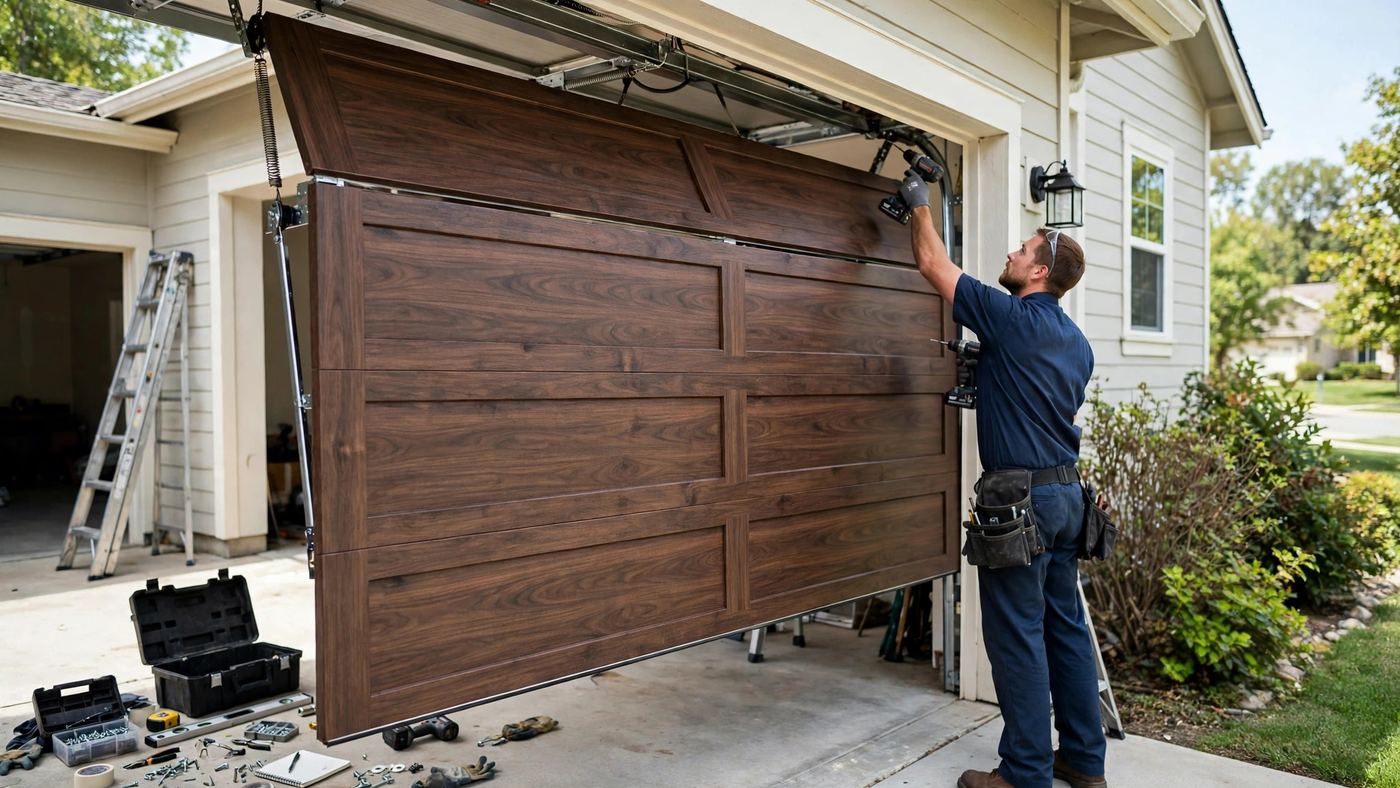
This guide names the products, walks every lubrication point in the order a technician works them, and states the one famous exception plainly: the tracks themselves are never lubricated. It also draws the line that saves money in both directions — which noises a lubricant pass genuinely cures, and which noises are hardware asking for a repair, unchanged no matter how much spray you apply.
In This Guide
- The Two Products You Need (and the Two to Put Back)
- Point by Point: Hinges, Rollers, Springs and Pulleys
- The Tracks Stay Dry: The Exception Everyone Gets Wrong
- The Twenty-Minute Routine, in Order
- When Noise Isn't a Lubrication Problem
- Climate Adjustments: Salt Air, Dust and Deep Cold
- Lubrication Is Also an Inspection
- The Sound Check: A Recording Worth More Than a Memory
Key Takeaways
- A garage door needs exactly two products.
- Work in this order, with the door closed and the opener's power disconnected.
- The most persistent lubrication myth in the garage is the greased track, and it survives because it sounds logical — the rollers run in the tracks, so surely the tracks should be slippery.
- Twice a year — spring and fall are the natural anchors — the full pass runs like this.
- Lubricant cures dryness, and dryness has a specific sound: squeaks and chirps at hinges and roller stems that change the moment the spray lands.
- The twice-a-year baseline assumes a temperate garage; our service areas argue for local editions.
- Notice what the routine forces: twenty minutes spent within inches of every wear part the door owns, twice a year, on a schedule.
- Before your next lubrication pass, record one full open-close cycle on your phone, standing in the same spot in the garage.
How to use this guide: work the checks in the order given — they're sequenced from the most common and cheapest causes to the rarest and most involved, which is exactly how a technician's diagnosis proceeds. Stop at the step that solves it, and stop entirely at anything involving springs, cables or a door that's crooked or off its tracks: those are professional jobs, and this guide will tell you plainly when you've reached one. If you reach the end without a fix, call (210) 964-8892 and tell the dispatcher which steps you completed — you'll skip half the diagnosis and get the right parts on the first truck.
The Two Products You Need (and the Two to Put Back)
A garage door needs exactly two products. The first is a silicone or white-lithium garage-door lubricant — sold under that name at any hardware store — for hinges, roller stems, bearings, pulleys and the opener chain. The second is the same lubricant applied as a light wipe on the springs, where its real job is corrosion control. One can lasts a household a year or two; this is a ten-dollar shelf, not a collection.
The two products to put back: penetrating oil and grease. WD-40 and its cousins are solvents — excellent for cleaning a grimy hinge or freeing a stuck latch, but they evaporate and leave the part drier than a real lubricant would. Use them as the cleaner before the lubricant, never as the lubricant. Grease is the opposite failure: it stays, and everything the garage air carries — dust, grit, road sand — sticks to it, forming an abrasive paste in exactly the places parts move. On a garage door, grease is not protection; it is slow sandpaper.
Point by Point: Hinges, Rollers, Springs and Pulleys
Work in this order, with the door closed and the opener's power disconnected. Hinges first: a short burst at each hinge knuckle, then work the door by hand a few inches so the lubricant walks into the pivot. Rollers next: lubricate the stem where it slides in the hinge barrel and, on steel rollers, the bearing at the wheel's center. Sealed nylon rollers are the exception — their bearings are closed for life, and spraying them accomplishes nothing but overspray.
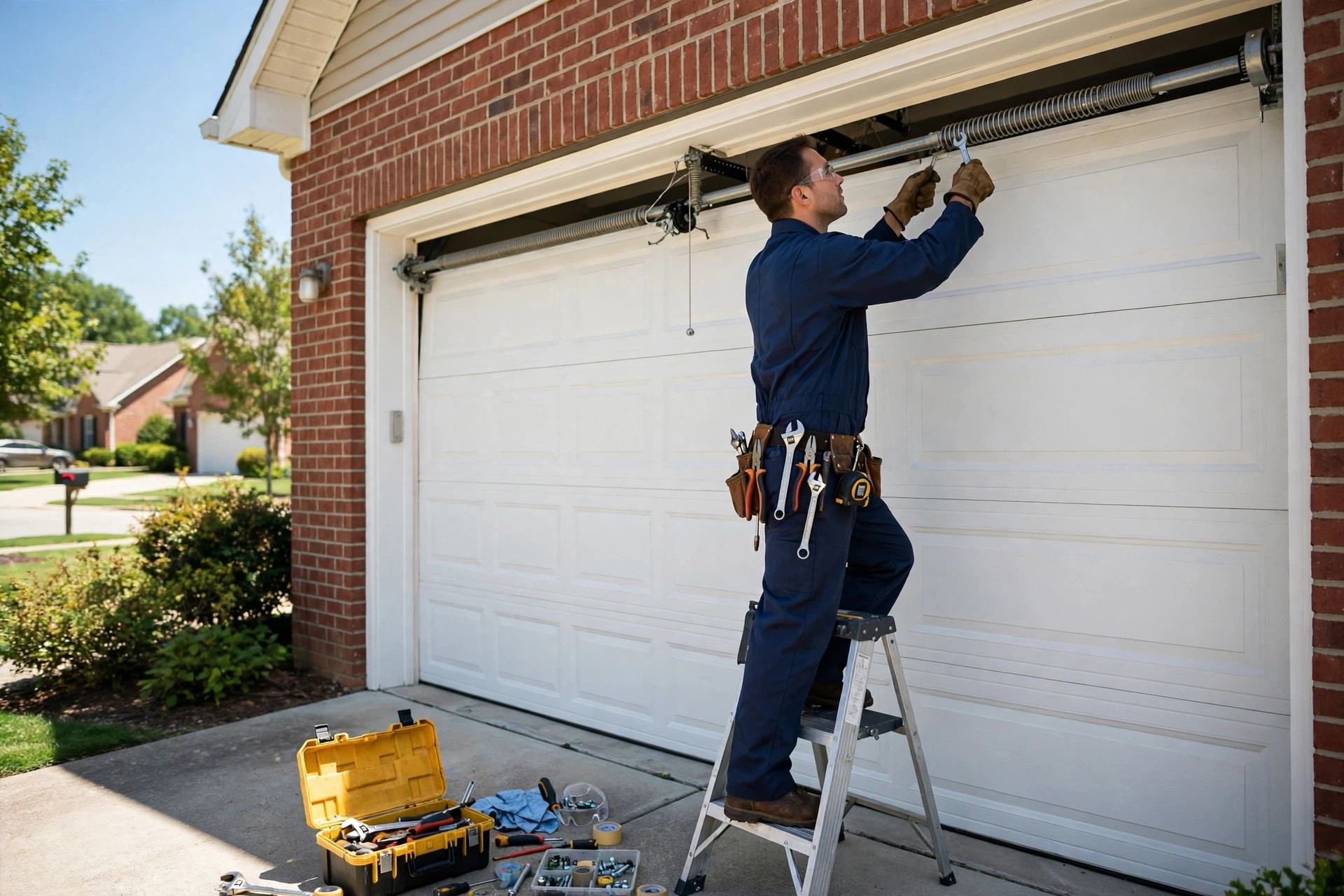
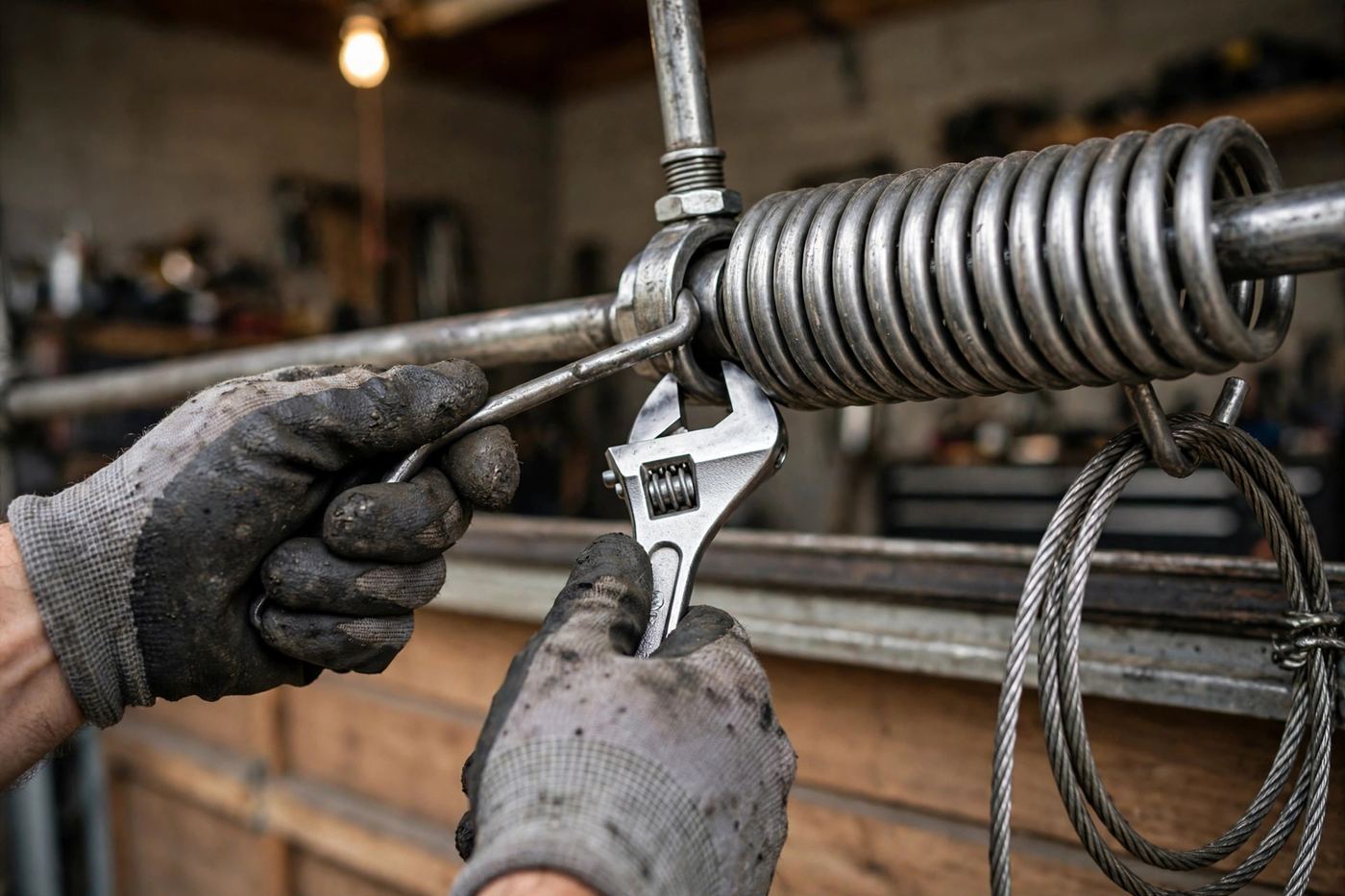
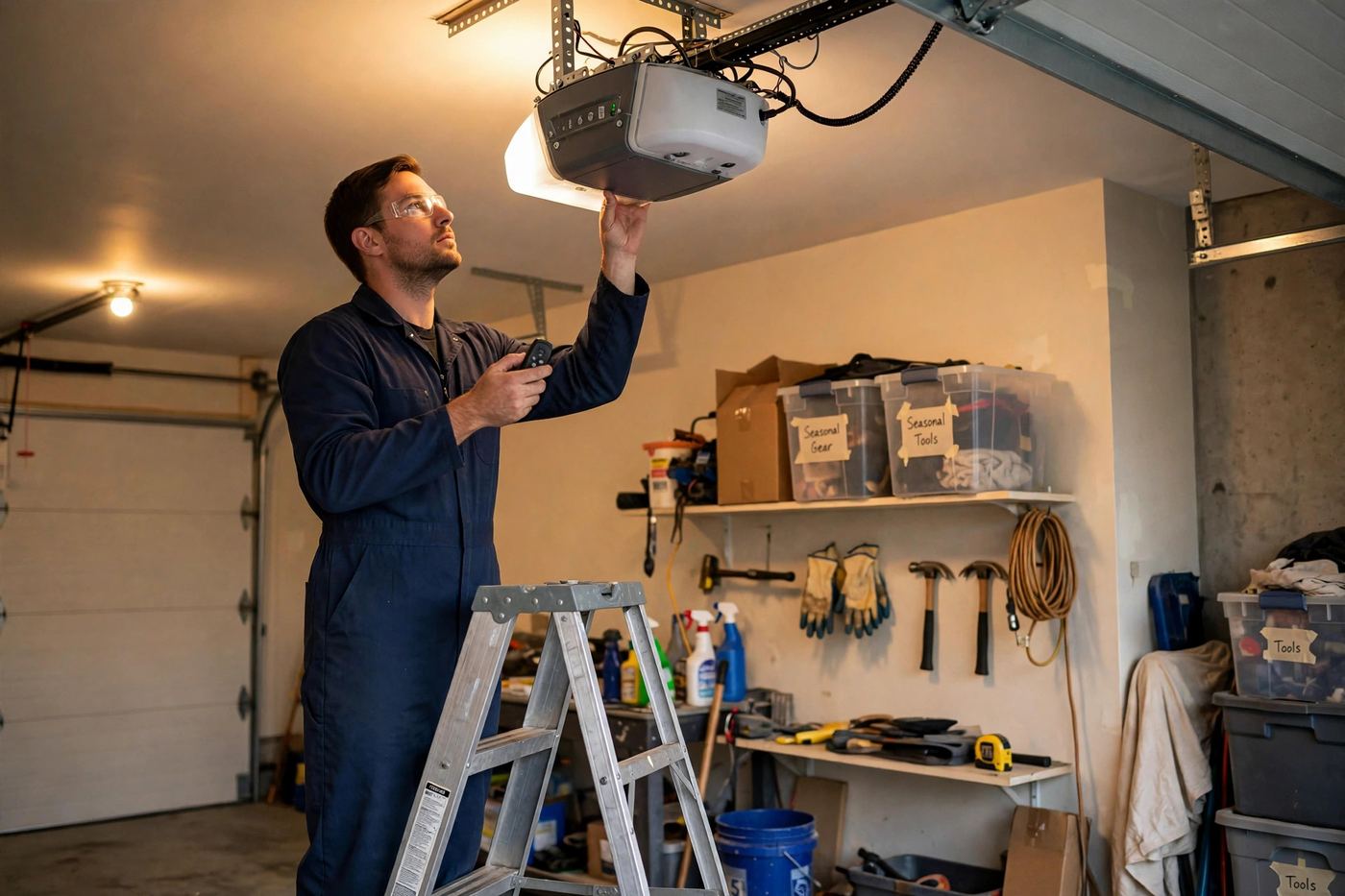
Springs get a light, even wipe along the coils — you are laying down a rust barrier, not a bath — applied from a stable ladder with the door down, spray only, never hands between coils and never any adjustment of the spring itself. Extension-spring pulleys take a drop at their axle. Last, the opener: a chain rail accepts a light coat along the chain; a belt rail accepts nothing at all — lubricant on a belt makes it slip and shortens its life. When in doubt about a point, the test is simple: metal pivoting or sliding on metal gets lubricant; anything the door merely passes through does not.
The Tracks Stay Dry: The Exception Everyone Gets Wrong
The most persistent lubrication myth in the garage is the greased track, and it survives because it sounds logical — the rollers run in the tracks, so surely the tracks should be slippery. They should not. The rollers roll; the track is a guide channel, not a bearing surface. Grease in the channel collects every particle the tires track in, and the rollers then grind that paste along the track on every cycle — the door gets louder and the track wears faster, in the name of maintenance.
What tracks actually need is cleaning and alignment. Wipe the channels with a rag — a solvent cleaner is legitimate here — and remove the grit line where the rollers travel. If a roller is clattering in one spot, the cause is a track that has drifted out of parallel or a bracket that has loosened, and the fix is a wrench on the bracket bolts, not a lubricant. A clean, dry, true track is the finished state; if your door's tracks shine with grease, the kindest service you can do them is to wipe them back to dry.
The Twenty-Minute Routine, in Order
Twice a year — spring and fall are the natural anchors — the full pass runs like this. Disconnect the opener's power and pull the release so the door is manual. Clean first: tracks wiped, hinge knuckles and roller stems freed of old grit with a rag and, where needed, the solvent cleaner. Lubricate second, in the order above, sparingly — a burst or a drop per point, because excess lubricant does not stay on the part; it migrates to the floor, the car and the door's face.
Wipe the excess, reconnect the opener, and run two full cycles while you listen. That listening pass is part of the job, not a courtesy: a properly lubricated door changes its sound immediately — squeaks gone, rumble reduced to the honest noise of a healthy system. Note the date where you keep the opener manual. Households near salt air or on dusty roads should run the routine three or four times a year; the lubricant is doing corrosion and grit duty there, not just friction duty, and it spends faster.
When Noise Isn't a Lubrication Problem
Lubricant cures dryness, and dryness has a specific sound: squeaks and chirps at hinges and roller stems that change the moment the spray lands. Everything else survives a lubrication pass, and the survivors are a diagnostic list. Grinding that continues unchanged means a roller bearing has failed internally — the lubricant cannot reach a sealed, collapsed bearing, and the roller set ($120-$250) is the repair. A rumble that localizes to one side points at one dying roller, not a dry door.
Rattling is loose hardware — hinge bolts and track brackets vibrated free over thousands of cycles — and answers to a wrench, not a spray. A bang or a new heaviness is spring territory: fatigued steel announcing itself, where lubricant protects a healthy spring but cannot restore a spent one ($120-$350 when it lets go). The discipline that saves money: lubricate on schedule, and treat any sound that outlives the pass as information. The spray can is maintenance. It was never a repair, and doors that are sprayed instead of diagnosed eventually bill for both.
Climate Adjustments: Salt Air, Dust and Deep Cold
The twice-a-year baseline assumes a temperate garage; our service areas argue for local editions. In salt-air territory — the San Diego coast, the Gulf-facing side of Texas, New England shoreline towns — lubricant is primarily corrosion armor: springs and cables rust from the outside in, and the routine's emphasis shifts to even spring coverage and a wipe of exposed cable, run quarterly rather than twice a year. There the spray is buying spring life, not quiet, and its return is measured in the $120-$350 job that does not happen early.
Dusty regions run the routine in the opposite spirit: less product, more cleaning, because every excess drop becomes grit glue. Wipe every point before lubricating, apply half what instinct suggests, and expect the tracks to need their dry wipedown most often. Deep-cold garages in our Massachusetts, Connecticut and Indiana winters have the simplest adjustment: use the garage-door-rated product and ignore the folk worry about thickening — rated silicone and lithium lubricants stay serviceable far below any temperature your garage will see. It was always grease that thickened into January's problem; the modern products were formulated against exactly that failure.
Lubrication Is Also an Inspection
Notice what the routine forces: twenty minutes spent within inches of every wear part the door owns, twice a year, on a schedule. That proximity is worth as much as the lubricant. The roller you are spraying is the roller whose bearing wobble you will feel. The hinge knuckle taking its burst is the hinge whose crack you will see. The cable run beside the bottom bracket — the fraying stage, visible months early — passes directly through your field of view on the way to the pulleys.
Work the pass as the inspection it secretly is. Spin each roller by hand and note any that drag. Sight along the cables. Look at the spring coils you are coating for the rust blooms the wipe is meant to prevent. A lubrication pass that ends with one sentence in the maintenance log — the date, and anything seen — converts a chore into the backbone of the door's whole maintenance history. The cheapest repairs in this trade are all the same repair: the one that was scheduled because somebody was standing close, looking, on an ordinary afternoon.
The Sound Check: A Recording Worth More Than a Memory
Before your next lubrication pass, record one full open-close cycle on your phone, standing in the same spot in the garage. After the pass, record the same cycle from the same spot. The pair of recordings does three jobs no memory can. It proves the pass worked — dry squeaks are unmistakable in the before, and their absence is unmistakable in the after. It gives you a baseline: the honest sound of your door healthy, against which every future change is measured.
It also dates decline. Doors rarely fail silently; they get louder by degrees over months, too gradually for an ear that hears them daily to notice. A recording from spring played beside one from fall makes a year's drift audible in ten seconds — a roller spending its bearing, a hinge going dry early, a spring beginning to complain. Show a technician the pair and you have handed them a timeline, which is the thing diagnosis is made of.
Keep the recordings with the maintenance log — the lubrication dates, the battery dates, the test results. Together they are the door's service record, assembled for free out of habits that take minutes. It is the same document a good car keeps in its glovebox, and it pays in the same currency: faster diagnoses, honest quotes, and a door whose history is evidence instead of folklore.
Garage Door Lubrication Reference (2026)
| Item | Cost / Rating | Notes |
|---|---|---|
| Silicone or lithium garage-door lubricant | $8-$15 per can | One can lasts a household a year or two |
| The 20-minute routine, DIY | Twice a year | Spring and fall; quarterly in salt air or dust |
| Professional tune-up (lubrication included) | $75-$150 | Adds balance set, hardware torque, both safety tests |
| Roller set replacement | $120-$250 | For failed bearings — lubricant cannot revive them |
| Spring replacement | $120-$350 | Lubricant protects springs; it cannot rewind a fatigued one |
| Belt-drive rail | Never lubricate | Lubricant makes the belt slip; chain rails take a light coat |
Frequently Asked Questions
How often should I lubricate my garage door?
Twice a year for most households — a spring pass and a fall pass cover it. Go to three or four times a year near salt air (coastal San Diego, the Gulf side of Texas, New England shorelines) or on dusty, unpaved roads, where the lubricant is also your corrosion barrier and grit defense and spends itself faster.
Can I use WD-40 on my garage door?
As a cleaner, yes; as the lubricant, no. WD-40 is a solvent — it frees stuck parts and cleans grime, then evaporates and leaves the metal essentially dry. The correct sequence is solvent to clean, then a silicone or lithium garage-door lubricant to stay. Doors 'maintained' with penetrating oil alone squeak again within weeks, because nothing was ever lubricated.
Should I grease the garage door tracks?
No — the tracks stay dry. Rollers roll inside them; the track is a guide, not a bearing. Grease in the channel traps grit and becomes an abrasive paste the rollers grind along on every cycle. Wipe the tracks clean instead, and treat noise from the track area as an alignment or roller problem, not a lubrication shortage.
What is the best lubricant for garage door springs?
A silicone or lithium garage-door lubricant, applied lightly along the coils with the door closed. On springs the lubricant's main job is corrosion control — rust blooms are where fatigued coils start to fail — so even coverage matters more than quantity. Spray or wipe only: never handle, unwind or adjust a spring, whatever the lubricant can says.
Will lubricating my garage door make it quiet?
It will cure the squeaks and chirps of dry hinges and roller stems, and you will hear the difference in the first cycle. It will not cure grinding (a failed roller bearing), rattling (loose hardware) or a bang and sudden heaviness (a fatigued spring). A noise that survives a proper lubrication pass is a hardware diagnosis — that survival is itself the useful result.
Is it safe to lubricate the springs myself?
Yes, within clear limits: door closed, power off, a light spray or wipe along the coils from a stable ladder, and no contact with the spring beyond the lubricant itself. What you are doing is external corrosion protection. What you must never do is unwind, adjust, clamp or replace a spring — that tension work is the professional half of the system, and the line between the two is exactly the line this guide draws.
Related Services
Garage Door Maintenance & Tune-Up
A full tune-up: balance test, lubrication, hardware tightening, sensor and safety checks — the cheapest way to avoid a breakdown.
Learn more about garage door maintenance & tune-up →Roller & Hinge Repair
Grinding, rattling, shuddering door? Worn rollers and hinges are the usual culprits — replaced as a set for a door that glides.
Learn more about roller & hinge repair →Garage Door Repair
Complete diagnosis and repair for doors that won't open, close, balance or seal — most repairs finished in a single visit.
Learn more about garage door repair →← All garage door guides · Costs & pricing hub
Garage Door Stuck? We Can Fix It Today.
Same-day appointments and 24/7 emergency service across all 52 of our service cities. Upfront price before work starts — no surprises on the invoice.
(210) 964-8892 ☎ Call Now — Open 24/7