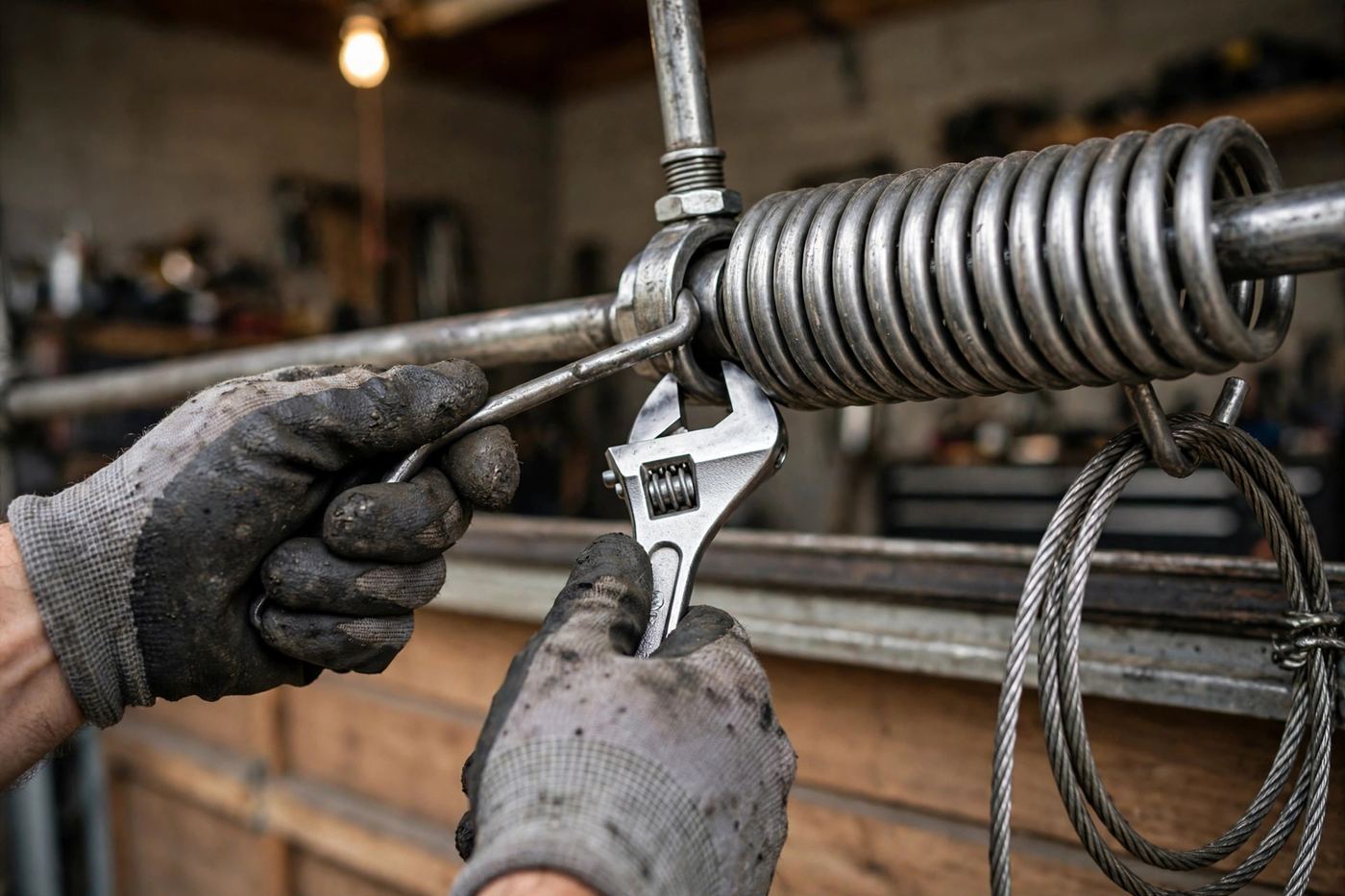
This guide covers the safe ways to break that bond — warmth and patience, applied in the right places — and the two tempting moves that convert a freeze-up into a repair bill. It then runs the inspection a hard freeze-up earns, because ice can tear a seal and strain an opener even when the freeing goes well, and closes with the drainage and seal fixes that keep one frozen morning from becoming an annual tradition.
In This Guide
- Why Doors Freeze: The Meltwater Chain
- First Moves: Confirm It's Ice, Not a Breakdown
- Freeing the Door: Warmth, Patience, and the Two Forbidden Moves
- After It Frees: The Damage Check
- Prevention: Seals, Thresholds and Where the Water Goes
- The Car-Trapped Version: Getting Out When the Door Won't Move
- Freeze-Ups in Our Northern Service Areas
- The Night-Before Routine for Freeze Warnings
Key Takeaways
- A frozen door is the end of a three-step chain, and every link is ordinary.
- Before freeing anything, confirm the diagnosis — because a broken spring on a cold morning wears the same costume.
- The working method is warm water and time.
- A freeze-up that needed force anywhere in its story earns a five-minute inspection once the door is moving.
- Every prevention targets a link in the meltwater chain.
- The freeze-up that matters is the one with the car on the wrong side of it and a morning that will not wait.
- Our cold-climate cities — the Massachusetts, Connecticut and Rhode Island corridor, Indiana, Kansas and Missouri — each run a local edition of the same physics.
- The forecast that should trigger a garage owner's attention is a specific one: a thaw day followed by a hard freeze night.
How to use this guide: work the checks in the order given — they're sequenced from the most common and cheapest causes to the rarest and most involved, which is exactly how a technician's diagnosis proceeds. Stop at the step that solves it, and stop entirely at anything involving springs, cables or a door that's crooked or off its tracks: those are professional jobs, and this guide will tell you plainly when you've reached one. If you reach the end without a fix, call (210) 964-8892 and tell the dispatcher which steps you completed — you'll skip half the diagnosis and get the right parts on the first truck.
Why Doors Freeze: The Meltwater Chain
A frozen door is the end of a three-step chain, and every link is ordinary. Step one: water arrives — snow melting off a warm car, a midday thaw running down the driveway, slush tracked in on tires and left along the door line. Step two: the water migrates to the lowest, coldest line it can find, which is the slab edge directly under the bottom seal. Step three: the night's hard freeze turns that shallow pool to ice, bonding the rubber seal to the concrete along the door's full width.
Some garages run this chain every cold snap and others never do, and the difference is geometry and seal condition. North-facing and shaded driveways hold their ice hours longer. A slab that slopes toward the garage delivers its meltwater to the seal like a funnel. And an old, hardened seal bonds far worse than a new one: flattened rubber presents a wide, flat contact face, and its cracks hold water exactly where the freeze happens. A freeze-up, in other words, is rarely bad luck. It is a drainage path meeting a tired seal on a cold night.
First Moves: Confirm It's Ice, Not a Breakdown
Before freeing anything, confirm the diagnosis — because a broken spring on a cold morning wears the same costume. The frozen door's tells: it strains evenly, both sides together, and may move a fraction of an inch before the opener gives up or reverses; there is often a visible ice line or frost bridge at the seal; and the failure arrived with a freeze that followed a thaw. The breakdown's tells are different: one side lower than the other, a loud bang in the recent past, or a visible gap in the spring coil above the door.
If the door hangs crooked or the spring shows a gap, stop here — that is a counterbalance failure, the opener stays off, and the job belongs to a technician. If the picture is ice, disconnect the opener before doing anything else: pull the release cord with the door down, so nothing electric fights the bond while you work. An opener straining against ice spends its drive gear and can bend the top section where it pulls — the freeze is free to fix, and the forcing is what costs money.
Freeing the Door: Warmth, Patience, and the Two Forbidden Moves
The working method is warm water and time. Pour warm — not boiling — water slowly along the seal line from outside, a kettle or two, working the full width and letting each pass melt rather than shock. Boiling water is a genuine error: thermal shock can crack cold concrete and damage the seal, and the excess runs off and refreezes into a wider sheet. A heat gun or hair dryer on a low setting, kept moving a few inches from the rubber, does the same job where water is impractical. As the bond releases you will hear it — small ticks and cracks as sections let go.
Then the two forbidden moves, stated plainly because both are instinctive. Never run the opener repeatedly against the ice: the gear strips, the top panel bends at its strut, and a $0 morning becomes an opener repair. And never chip, pry or shovel at the seal line: the seal tears, the bottom retainer bends, and the bottom section dents — panel damage runs $250-$800. Once the bond is broken along the full width, lift the door by hand (it should feel normally balanced), dry the seal line and the slab edge thoroughly, and only then reconnect the opener. The drying matters: a wet seal line at dusk is tomorrow's repeat performance.
After It Frees: The Damage Check
A freeze-up that needed force anywhere in its story earns a five-minute inspection once the door is moving. The seal first: run a hand along its length for torn, flattened or missing sections — ice leaves with pieces of weak rubber, and a seal that froze hard has usually been dying for a season. The bottom retainer and section edge next: look for bends where the bond held longest, typically at the corners.
Then the machine's side of the story. Run two full cycles and listen to the opener for new grinding — the sound of a drive gear that strained against the ice and lost teeth doing it. Run the balance test while you are there: disconnect, lift halfway, let go; a door that still hovers has unharmed springs, while new heaviness means the freeze morning found a spring problem too. Finish with the two safety tests — the photo-eye wave and the 2x4 reverse — because a door that has been strained, lifted and re-seated deserves its protections verified before it goes back to daily duty. Note the date in the maintenance log; a second freeze-up in one season is a pattern, and patterns get fixed, not freed.
Prevention: Seals, Thresholds and Where the Water Goes
Every prevention targets a link in the meltwater chain. The seal link: a supple, full-profile bottom seal replaced in the fall — before it hardens into bonding shape — is the single most effective fix, and it is a $125-$300 installed package that also ends the drafts. The water-path link: a raised threshold strip across the opening lifts the seal's landing line up out of the meltwater's path entirely, which is the permanent answer for slabs that slope toward the door.
The housekeeping link costs nothing: sweep or squeegee the seal line dry on thaw evenings, clear the slush the tires tracked in before it melts and migrates, and keep the driveway's melt running away from the door where the grade allows it. None of this is elaborate, and that is the point — a frozen door is a small system failing politely, in advance, in three separate places. Fix any one of the three properly and the coldest morning of the year becomes the morning the door simply opened, which is the review every garage door wants.
The Car-Trapped Version: Getting Out When the Door Won't Move
The freeze-up that matters is the one with the car on the wrong side of it and a morning that will not wait. The sequence stays disciplined even under time pressure: opener off and disconnected first, then warmth — and from inside, a space heater aimed at the bottom seal from a safe clearance warms the same bond line from the warm side, often faster than kettles outside, because the ice is usually thinnest where the garage's residual heat reaches it. Keep the heater well clear of the door, the car and anything stored, and stay in the room while it runs.
Once the bond releases along its full width, lift by hand only if the door feels normally balanced — the freeze does not change the spring rule, and a door that lifts impossibly heavy or crooked stays down. If the bond will not break or the door cannot be lifted safely, the situation is a legitimate emergency call: freeze-ups with trapped cars are sequenced as rescues by dispatchers, and the crew frees the door with the same warmth-and-patience method, then inspects the seal and opener before leaving. What never enters the sequence, at any level of morning urgency, is the opener fighting the ice or a pry bar at the seal — the two moves that bill.
Freeze-Ups in Our Northern Service Areas
Our cold-climate cities — the Massachusetts, Connecticut and Rhode Island corridor, Indiana, Kansas and Missouri — each run a local edition of the same physics. New England's freeze-thaw cycling is the repeat offender: a January thaw lays the water down at noon and the night's plunge welds it, sometimes three times in a week, which is why the fall seal replacement earns its keep there most visibly. The Midwest's version arrives with ice storms, when wind-driven melt finds the seal line from directions a calm thaw never uses.
Road salt writes a subplot in both regions. The slurry tires track in is engineered to melt ice at the tire — and it keeps working at the seal line, thawing a shallow channel by day that refreezes harder and dirtier by night, while the salt itself corrodes the bottom section's edge, the retainer and the cable ends it splashes. The countermeasure is a rinse: on the season's thaw days, run clean water along the seal line and the slab edge and let it dry. It is the winter twin of the coastal salt-air routine our San Diego pages describe — same enemy, different season, same cheap answer.
The Night-Before Routine for Freeze Warnings
The forecast that should trigger a garage owner's attention is a specific one: a thaw day followed by a hard freeze night. That pairing lays the water down and then welds it, and the household that spends ninety seconds on the thaw evening rarely meets the welded door. The routine: sweep or squeegee the seal line and the slab edge dry, clear the slush the tires tracked in before it melts and migrates, and leave the door closed for the evening — every opening tracks in more water and stirs what is already there.
For a seal already known to be marginal — hard, flat, living on borrowed seasons — one bridge measure earns its place: a thin smear of petroleum jelly or a wipe of silicone spray along the seal's contact face before the freeze. Ice bonds poorly to a greased surface, and the bond that does form releases with a fraction of the force. It is a bridge, not a repair: it buys the marginal seal one winter at a time while the fall replacement stays on the calendar where it belongs.
Then, in the morning, whatever the night did: resist the opener's button until you have looked at the seal line. Ten seconds of looking separates the doors that open normally — most of them, even after hard freezes, in garages where the chain was broken somewhere — from the one that needs the kettle. The routine's real product is not any single dry seal line. It is the habit of treating the freeze forecast as information, the way coastal owners treat a storm warning: ninety seconds of preparation, and the weather becomes weather again instead of an emergency.
Frozen Garage Door: Fixes & Costs (2026)
| Item | Cost / Rating | Notes |
|---|---|---|
| Warm-water or heat freeing, DIY | Under $10 | Warm — not boiling — water along the seal line; dry after |
| Emergency freeing plus inspection visit | $75-$150 | Bond broken, seal and opener checked, safety tests run |
| Bottom seal replacement package | $125-$300 | The fall fix that prevents the repeat performance |
| Threshold strip, installed | Varies by door width | Raises the seal's landing line out of the meltwater path |
| Bottom section replacement | $250-$800 | When forcing against the ice has creased the section |
| Opener gear or board repair | $150-$300 | The usual price of letting the opener fight the bond |
Frequently Asked Questions
Can a frozen garage door damage the opener?
Yes — if the opener is left to fight the ice. Repeated straining against a bonded seal strips the drive gear and can bend the top section where the opener pulls, turning a free fix into a $150-$300 gear or board repair. Disconnect the opener first, free the bond with warmth, and reconnect only once the door lifts freely by hand.
Will pouring hot water on a frozen garage door work?
Warm water works; boiling water is a mistake. Pour warm water slowly along the seal line so it melts the bond progressively. Boiling water can crack cold concrete from thermal shock, damage the rubber, and spreads a wider sheet that refreezes. Dry the line thoroughly afterward, or the same water frees you today and glues you again tonight.
Why does my garage door freeze shut every winter?
Because the meltwater chain is intact: water reaches the seal line (a sloping slab, tracked-in slush, a thaw-day puddle), the seal is old and flat enough to hold it there, and the freeze does the rest. Break any link — a fresh supple seal, a threshold strip that lifts the landing line, or a dry seal line on thaw evenings — and the annual freeze-up retires.
Should I force my garage door open if it is frozen?
No. Forcing is how freeze-ups become repair bills: the opener's gear strips, the top panel bends, a pried-at seal tears and the bottom retainer bends. The bond is only ice — free it with warm water and patience, lift by hand once it releases along the full width, and save the force for doors that are actually broken.
How much does it cost to fix a door damaged by ice?
It depends what the forcing hurt. A torn bottom seal is a $125-$300 package; an opener gear or board strained against the ice runs $150-$300; a bottom section creased by prying or by the opener's pull is a $250-$800 panel job. The freeze itself, freed properly, costs a kettle of warm water — the entire price difference is the forcing.
My door froze once. Should I replace the seal now or wait?
Test the seal before spending: press it with a thumb along its length. A supple seal that springs back, on a door that froze once in an exceptional thaw-freeze, points at the drainage link — clear the meltwater path and watch it. A seal that is hard, flat or cracked has told you it will bond again on schedule; replacing it in the fall, at the $125-$300 package price, is the version of this job that happens in a sweater instead of a crisis.
Related Services
Emergency Garage Door Repair
Door stuck open at midnight, car trapped before work, spring snapped with a bang — 24/7 emergency crews, day or night.
Learn more about emergency garage door repair →Garage Door Maintenance & Tune-Up
A full tune-up: balance test, lubrication, hardware tightening, sensor and safety checks — the cheapest way to avoid a breakdown.
Learn more about garage door maintenance & tune-up →Garage Door Repair
Complete diagnosis and repair for doors that won't open, close, balance or seal — most repairs finished in a single visit.
Learn more about garage door repair →← All garage door guides · Costs & pricing hub
Garage Door Stuck? We Can Fix It Today.
Same-day appointments and 24/7 emergency service across all 52 of our service cities. Upfront price before work starts — no surprises on the invoice.
(210) 964-8892 ☎ Call Now — Open 24/7